Skip to content

Wild Ginseng Root Culture Project Solving Long-Term 40-Day Cultivation Challenges with Patented Rolling Blades

Project Overview

Company D, a health functional food and ginsenoside extraction company, operates a highly demanding process that cultivates cultured wild ginseng roots for 40 days in a large-scale 12-ton tank.
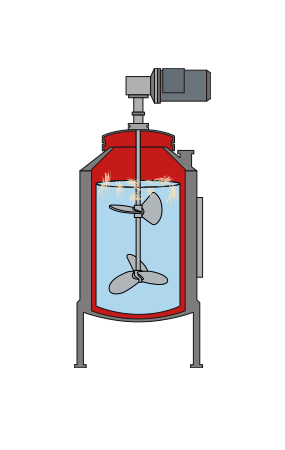
During the long cultivation period, complete contamination control was essential. At the same time, the company faced two major challenges: hardening caused by exposure of the cultured roots to air and irregular liquid level changes due to culture medium absorption.
To solve both issues simultaneously, Company D introduced SEDNA ENG’s adjustable impeller technology.
Challenges

1. 40-Day Risk and Hermetic Containment

With a cultivation period of up to 40 days, even the slightest contamination during the process could result in the disposal of the entire 12-ton batch. Although this was a food process, it required pharmaceutical-level hermetic containment.

2. Surface Hardening and Growth Arrest

Cultured wild ginseng roots must remain submerged in liquid to grow properly. When exposed to air above the liquid surface, the roots harden, ginsenoside content decreases, and growth stops, creating a critical process issue.

3. Difficulty in Liquid Level Detection

As the cultured roots grew, they continuously absorbed the culture medium, causing the liquid level to change. Since the tank was densely filled with roots, conventional level sensors could not accurately detect the liquid level, making impeller position control difficult.

SEDNA Solution

1. SRFT Top-Mounted Magnetic Mixer

SEDNA ENG applied the SRFT top-mounted magnetic Agitator to eliminate contamination risks caused by seal wear. This enabled the process to maintain perfect aseptic conditions even during 40 days of continuous operation.

2. Patented Rolling Blade (Liquid-Level-Following Impeller)

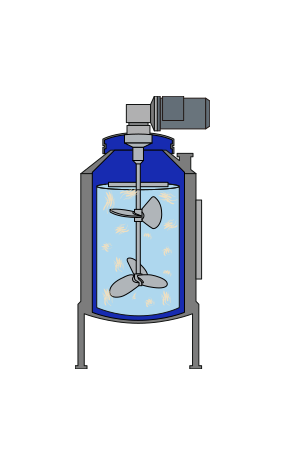
To respond to liquid level changes without sensors, SEDNA ENG applied its patented Rolling Blade technology, using buoyancy and mechanical design. As the liquid level changes, the blade automatically rises and moves with the liquid surface, gently turning the cultured roots back into the medium for continuous wetting.

3. Optimized Oxygen Transfer

Through magnetic mixing, oxygen supplied from the bottom sparger is evenly dispersed throughout the culture medium. This allows the cultured roots to absorb sufficient oxygen, even in high-density cultivation conditions.

PROBLEM

SOLUTION

01

Reduced Surface Hardening

The Rolling Blade continuously wetted the cultured roots at the liquid surface, reducing surface hardening by over 50% and enabling the harvest of premium-quality cultured roots.

02

Auto-Leveling Performance

With a smart design that allows the impeller to follow the liquid level without complex sensor control, the system improved both process automation and operational convenience.

03

High-Purity Ginsenoside Production

By creating a stable cultivation environment, the process exceeded the target ginsenoside extraction yield and successfully completed the project.

Get the Right Solution for Your ProcessExperience SEDNA ENG’s technical expertise and engineering partnership.